EVIDENCE-BASED • FREE

Protein IntakeCalculator

Find out how much protein you actually need each day — in grams, per kilogram of body weight, and per meal — based on your age, sex, size, training load and goal.

Your details

Biological sex
Height
cm
kg
Activity level
Your goal

Free, instant, and nothing is stored.

Your results will appear here

Fill in your details and we will show your daily protein target, how much that is per kilogram of body weight, and how to split it across meals — with a plain-language explanation.

The basics

What is protein?

Protein is one of three macronutrients, alongside carbohydrate and fat. It is built from amino acids — twenty of them, nine of which your body cannot make and must take from food. Those amino acids become muscle fibres, enzymes, hormones, immune cells, hair, skin and the transport proteins in your blood.

How much protein do you need?

The official minimum for adults is 0.8 g per kilogram of body weight per day — the amount that prevents deficiency in most sedentary people. It is a floor, not a target. Once you train, diet, or pass 50, research consistently points higher: roughly 1.2–1.6 g/kg for active adults and 1.6–2.2 g/kg for those building muscle or losing fat. Practically, that is 20–40 g of protein at each of three or four meals for most people.

Sedentary adult
0.8 – 1.0 g/kg
Recreationally active
1.2 – 1.6 g/kg
Building muscle
1.6 – 2.2 g/kg
Dieting while training
1.8 – 2.4 g/kg
Adults over 65
1.2 – 1.5 g/kg

Protein for muscle growth

Resistance training is the signal; protein is the material. Muscle protein synthesis rises for around 24 hours after a hard session, and a 25–40 g dose of protein containing enough leucine pushes it higher each time you eat. Beyond roughly 1.6 g/kg per day the extra gains flatten out, which is why 1.6–2.2 g/kg spread over three to four meals is the sweet spot for hypertrophy — not enormous single servings.

Protein for weight loss

Protein is the most filling macronutrient per calorie and the most expensive for your body to digest, using roughly 20–30% of its own energy in the process. In a deficit it also tells your body to burn fat rather than break down muscle. Higher-protein diets reliably produce better body-composition outcomes at the same calorie intake — start each meal with the protein, then fill the plate with vegetables and fibre.

Woman drinking a protein shake after a gym session
Training plus adequate protein is what builds and keeps muscle. Neither works well alone.

Food first

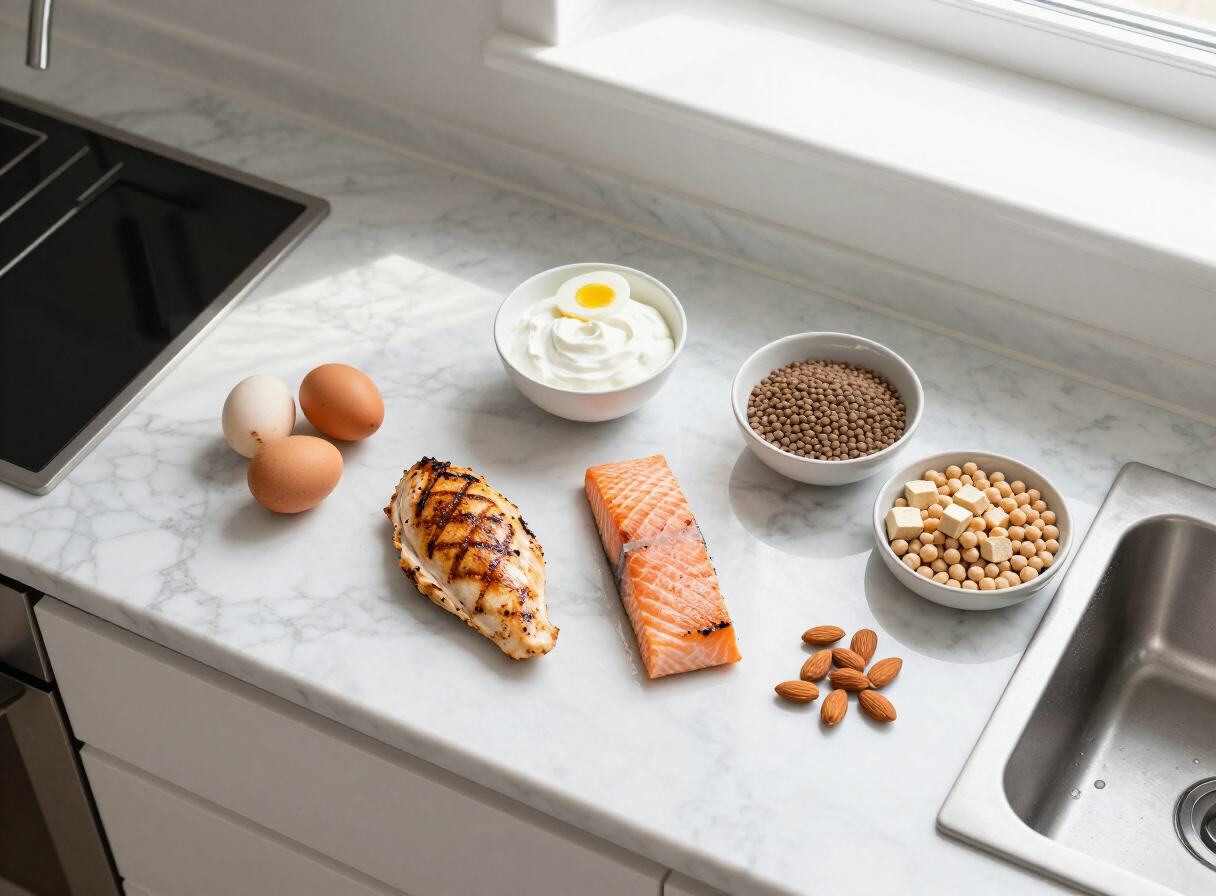
Protein sources that do the work

You do not need supplements to hit your number. Build meals around one solid protein anchor, then add a second smaller source — yogurt with your oats, lentils in your soup, eggs alongside toast.

  • Chicken breast

    31 g per 100 g

    Lean animal

  • Greek yogurt (0%)

    10 g per 100 g

    Dairy

  • Salmon fillet

    25 g per 100 g

    Omega-3

  • Eggs

    6 g each

    Whole food

  • Firm tofu

    17 g per 100 g

    Plant

  • Lentils, cooked

    9 g per 100 g

    Plant + fibre

  • Cottage cheese

    11 g per 100 g

    Slow digesting

  • Whey powder

    24 g per scoop

    Convenience

Flat lay of high-protein foods including chicken, salmon, eggs, yogurt, lentils and tofu

FAQ

Frequently asked questions

How much protein do I need per day?

Most healthy adults need between 0.8 g and 2.0 g of protein per kilogram of body weight per day. 0.8 g/kg is the minimum to avoid deficiency, around 1.2–1.6 g/kg suits recreationally active people, and 1.6–2.2 g/kg is common for people building muscle or dieting down. The calculator on this page places you inside that range based on your age, sex, weight, activity level and goal.

Is protein per kilogram better than a fixed number of grams?

Yes. A fixed target such as "100 g a day" is far too much for a 50 kg sedentary person and far too little for a 100 kg athlete. Scaling protein to body weight, then adjusting for training load and goal, is the approach used in nutrition research and sports guidelines.

How much protein can my body use in one meal?

Your body absorbs essentially all the protein you eat, but muscle-building signalling plateaus at roughly 0.4 g per kilogram of body weight per meal for most people — about 25–40 g. That is why splitting your total across three or four meals tends to work better than eating most of it at dinner.

Do I need more protein when losing weight?

Usually yes. In a calorie deficit, higher protein intakes (around 1.6–2.4 g/kg) help preserve lean muscle, keep you fuller between meals, and slightly increase the energy burned digesting food. That means more of the weight you lose comes from fat.

Can I get enough protein on a plant-based diet?

Absolutely. Lentils, chickpeas, beans, tofu, tempeh, seitan, edamame, quinoa, oats, nuts, seeds and soy milk all contribute. Plant proteins are slightly lower in leucine, so aim for the upper end of your range and vary your sources across the day to cover all essential amino acids.

Is too much protein bad for your kidneys?

In people with healthy kidneys there is no good evidence that high-protein diets cause kidney damage, even over several years. If you already have chronic kidney disease, liver disease, or are advised to limit protein for another medical reason, follow your clinician’s guidance instead of a calculator.

Do older adults need more protein?

Yes. Muscle becomes less responsive to protein with age, so many researchers recommend 1.0–1.2 g/kg for healthy adults over 50 and up to 1.5 g/kg for those who are frail or recovering from illness, alongside some resistance training. This calculator adds an allowance once you are over 50.

Do I need protein powder?

No — powder is a convenience, not a requirement. Whey, casein and plant blends are simply a cheap, fast way to add 20–25 g of protein when whole food is not practical, such as straight after training or on a busy day.

When is the best time to eat protein?

Total daily intake matters most. After that, even distribution helps: a protein-rich breakfast, lunch and dinner, plus a serving within a few hours of training. There is no narrow "anabolic window" you have to hit.

Does the calculator work for pregnancy or medical conditions?

No. Pregnancy, breastfeeding, kidney or liver disease, and recovery from surgery all change protein needs in ways a general calculator cannot model. Treat the result as an estimate and speak with a doctor or registered dietitian.

Stay Updated

Receive new calculators, wellness tips, and health articles delivered to your inbox.

Optional. We respect your privacy.